The Crisis of Government in Iran
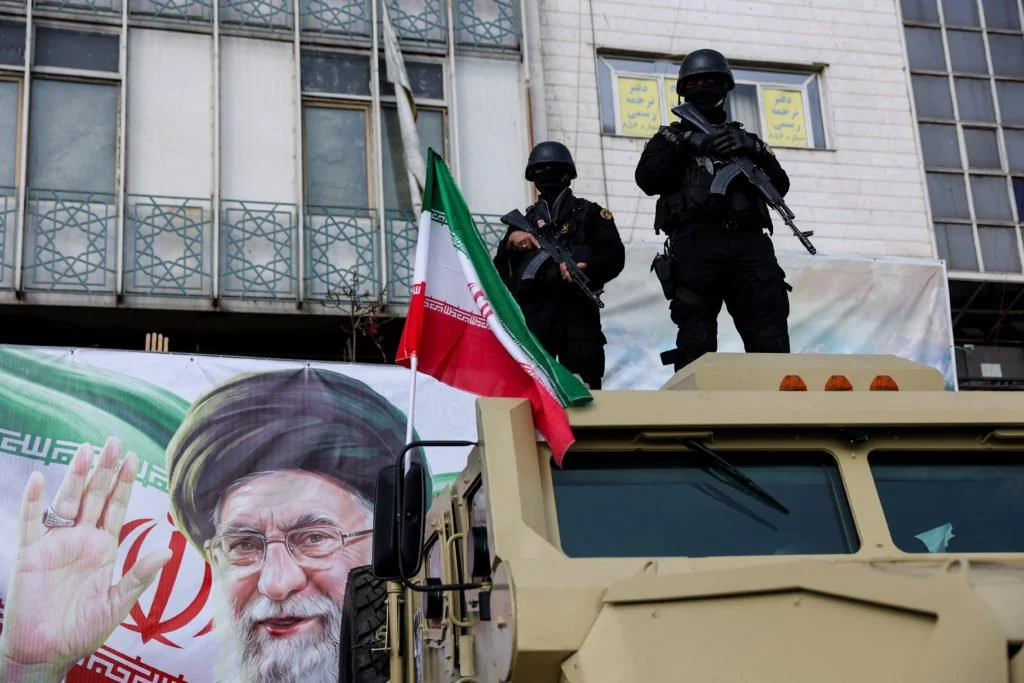
Iranian Soldiers During The Recent Conflict Between Israel and the United States
The modern world is full of loud opinions about the Middle East, but not always careful ones. Every new strike, every retaliatory attack, every debate in Washington, and every protest in the West creates another flood of reaction. Yet careful moral judgment requires more than outrage. It requires clarity about power, justice, and the nature of government itself.
The recent widening of the Iran conflict has forced that clarity upon us. On February 28, 2026, U.S. and Israeli strikes killed Iran’s Supreme Leader Ayatollah Ali Khamenei and other senior Iranian figures, pushing a long-shadow war into a far more direct and dangerous phase. In the days that followed, Iran retaliated not only against Israel but also against Gulf countries hosting U.S. forces, broadening the conflict across the region.
The escalation has not remained abstract. Israeli airstrikes hit oil depots and refinery-linked sites around Tehran, sending thick black smoke over the capital and raising fears about civilian health and environmental damage. At the same time, the conflict has disrupted tanker traffic through the Strait of Hormuz, one of the world’s most important energy chokepoints, after Iran threatened to block regional oil exports. Inside Iran, authorities have also carried out dozens of arrests tied to alleged espionage and information-sharing, a familiar sign that external war is being paired with intensified internal repression.
These details matter because they reveal more than airstrikes. They expose the character of a regime.
For years, Iran has harassed Israel primarily through proxies. Hezbollah in Lebanon and other regional actors have allowed Iran to pressure Israel from a distance while maintaining a measure of plausible deniability. But direct retaliation and regional escalation have made clear what was already true: Iran’s leadership is not merely reacting to events. It is acting according to a political logic shaped by domination, intimidation, and ideological preservation.
To understand why this matters, it helps to remember the broader context. The Middle East is not simply divided between Israel and its enemies. There is also a larger contest involving Iran and the Gulf states, especially Saudi Arabia. Israel’s strengthening ties with Gulf powers threaten Iran’s regional influence. Economic cooperation, political alignment, and regional normalization all weaken Tehran’s standing. In that sense, hostility toward Israel is not only ideological. It is also strategic.
That does not excuse Iran’s actions. It clarifies them.
Iran’s rulers are not simply animated by grievance. They are driven by the logic of power. They see Israeli-Gulf cooperation as a loss for their own ambitions, so they respond through intimidation, terror, escalation, and spectacle. Even when attacks fail to achieve all they intended militarily, they still serve another purpose: they project strength to hardliners at home and remind the region that Iran intends to remain a disruptive force. Recent threats against shipping and attacks tied to the widening war fit that pattern.
The issue is not merely whether one side in a conflict has suffered and the other has retaliated. The deeper issue is what kind of governments are at work, what they reward, and what they are trying to preserve. Scripture presents government as an institution meant to restrain evil and uphold justice. In both the Old and New Testaments, the basic logic is clear: the sword is given not to terrorize the innocent, but to punish wrongdoing and protect life.
By that standard, Iran stands exposed as a profoundly corrupt regime. Bad government is not simply inefficient government. It is not merely a government that taxes too much, wastes money, or stumbles into policy failures. Bad government is government that suppresses truth, crushes opposition, denies liberty, and spends its power not for the common good but for the preservation of its own ideological ambitions. That form is present in Iran.
Iran does not model justice. It jails dissent. It silences opposition. It restricts liberty. It aligns itself with regimes and movements that share the same instincts: coercion instead of persuasion, repression instead of freedom, fear instead of accountability. Its posture toward Israel is inseparable from its posture toward its own people. A government willing to suffocate liberty at home will have little hesitation in exporting violence abroad. The latest arrests inside Iran during the current war are not incidental to the conflict. They are part of the same moral pattern.
The same pattern appears in Hamas. Whatever complexities may exist in the history of Israel and Palestine, the moral character of Hamas as a governing force should not be difficult to identify. It is oppressive, violent, and deeply hostile to the basic freedoms that make human flourishing possible. It does not protect its people well. It does not prize truth. It does not build a just society. It weaponizes suffering and feeds on instability. This is one reason the conversation in the West so often becomes confused.
Many people rightly recognize suffering in Gaza. They see poverty, loss, hunger, and displacement, and they are right to grieve it. Christians should grieve it too. We should pray for the poor, the wounded, the grieving, and the vulnerable. We should care about humanitarian disasters wherever they unfold. But grief must not erase moral discrimination. Compassion for victims cannot mean blindness to oppressors.
There are many victims in this crisis. But not all parties bear the same moral weight.
That distinction matters because much of the rhetoric surrounding Israel and Gaza collapses categories that should remain clear. It is possible to acknowledge that Israel has acted harshly in certain ways and still insist that Hamas and the Iranian regime represent a clearer and more consistent form of oppression. It is possible to care deeply for ordinary Palestinians without romanticizing the governments and militant networks that have helped produce their suffering. It is possible to oppose civilian harm while still recognizing that democratic societies, for all their flaws, are not morally equivalent to terror regimes and authoritarian states. That is a distinction too many people no longer want to make.
Part of the problem is that public discourse increasingly prefers simplistic binaries. The oppressor and the oppressed are often assigned too quickly. Instead of serious historical and moral reasoning, many now default to power optics and ideological fashion. But these shortcuts do not help us tell the truth. The reality is more demanding. It requires that we ask which governments protect liberty, which governments silence it, which governments uphold some measure of justice, and which governments thrive on fear and destruction.
Israel is far from perfect. The United States is far from perfect. No honest observer should deny that. Democratic nations often fail, sometimes badly. They can be hypocritical, unjust, and shortsighted. Christians should never confuse patriotism with moral innocence. But there remains a meaningful difference between imperfect governments that preserve freedoms and oppressive governments that crush them. That difference matters.
It matters not only for foreign policy, but for Christian witness. If a government allows freedom of religion, freedom of speech, freedom of assembly, and freedom of the press, it creates conditions in which truth can be spoken, debated, proclaimed, and heard. Those are not small things. Those are gifts of common grace. They make possible the open preaching of the gospel, the gathering of the church, and the freedom of conscience. Where those freedoms are denied, both society and mission suffer.
That is why Christians should care about the installation and preservation of good government. Not because government is ultimate, but because government can either restrain evil or intensify it. A society with just laws and protected liberties is not the kingdom of God, but it is a place where neighbors are better protected, and the church can more openly fulfill its calling.
This is also why support for nations resisting coercive regimes can be morally defensible. Such support is not merely about strategic interest. It can also be about resisting the advance of governments that oppose liberty and reward domination. Iran’s recent threats to regional shipping, its attacks beyond Israel, and its internal crackdown during wartime all underscore that it is not simply another center of power among many. It is a regime shaped by repression at home and destabilization abroad.
Nor should we be naive about prayer. We should pray for Israel. We should pray for the Jews. We should pray for ordinary people in Gaza. We should pray for the suffering, the hungry, and the displaced. We should pray for justice against wicked rulers and for restraint in the midst of escalating conflict. We should pray for the people of Iran, many of whom live under a regime they did not freely choose and cannot freely challenge. And we should pray that God would raise governments that protect life, punish evil, and allow the truth of Christ to be freely proclaimed.
Because in the end, the deepest issue is not merely missiles, drones, oil markets, or foreign aid packages. The deepest issue is whether rulers will use their power for justice or for destruction.
Bad government is one of the great curses of the fallen world. It steals from the poor, lies to the public, silences the righteous, and spends its energy preserving itself rather than serving the weak. Iran is a vivid example of that curse. Hamas is another. They do not simply make bad decisions. They embody a moral disorder in which power is detached from responsibility. Christians should oppose that.
We should oppose corruption not because we imagine any nation is pure. However, scripture teaches us to care about justice, truth, and the protection of human life. We should oppose oppressors because governments matter. We should oppose it because tyranny harms real people. And we should oppose it because the gospel itself flourishes most openly where rulers do not attempt to suffocate truth. In a world of easy slogans and partisan noise, clarity is a form of faithfulness.
Not every government is the same. Not every cause is equally just. Not every protest is morally perceptive. Sometimes the truth is painfully simple: some governments are bad, and their badness leaves suffering in their wake.
Iran is one of them.