Argo and the Shape of Deliverance
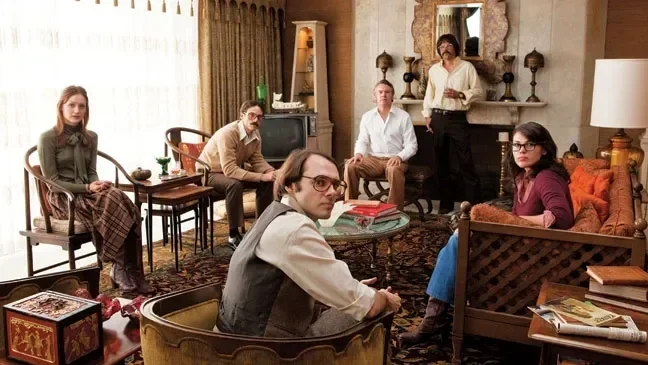
The Six Hostages in the Canadian Embassy
Partners & Citizens
Argo and the Shape of Deliverance
Why a hostage thriller about Iran still stirs our oldest longing: that someone would come into the danger, find the captives, and bring them home.
There are films that pass like weather, and there are films that stay. Argo stays.
Part of that is craft. Ben Affleck gives the film a lived-in texture—the pull-tab beer cans, the corduroy, the yellowed government interiors, the frayed nerves, the grain of the late 1970s. Part of it is structure. The film knows how to tighten the chest. It knows how to make a hallway, an airport desk, a glance, or a delay feel like a reckoning. But the deepest reason Argo remains with us is not aesthetic. It is moral.
The film understands something simple and ancient: we are moved by rescue because we know the world is dangerous. We know people can be trapped. We know some situations cannot be solved from within. And we know, perhaps more than we like to admit, that sometimes the only hope is that someone else comes in and leads us out.
The World Is Not Well
The premise of Argo is almost absurd in the way true stories often are. Six Americans escape the U.S. embassy during the 1979 Iran hostage crisis and find shelter in the Canadian ambassador’s residence. CIA operative Tony Mendez is tasked with getting them out by creating the cover of a fake science-fiction film.
A fake movie. A fabricated production. A rescue hidden inside performance.
And yet the emotional core of the story is not irony. It is exposure. These six people are cut off from ordinary life. They cannot walk freely. They cannot announce themselves. They cannot solve the problem by courage alone. They are alive, but only narrowly.
We are drawn to rescue stories because we already know, somewhere beneath all our confidence, that we need one.
The Human Scale of Fear
One of the virtues of Argo is that it resists glamour. Tony Mendez is not Bond. He is not polished myth. He is lonely, strained, estranged, tired, and necessary. The story does not rise on fantasy. It rises on burden.
Tehran is broken in public ways. Hollywood is broken in polished ways. Washington is broken in bureaucratic ways. But all three worlds are marked by the same fracture. Violence, loneliness, fear, ambition, confusion, exhaustion—these are not regional features. They are human ones.
A World After the Garden
The Christian imagination does not need to force biblical meaning onto Argo. The film already breathes the air of Genesis 3. You see it in the hanging body from the crane. You see it in the blindfolded hostages. You see it in the mobs, the threats, the shouting, and the fear. The world of Argo is not merely unstable. It is disordered.
Human beings are not flourishing in the world as they were made to flourish. They are frightened, compromised, and vulnerable. Evil is not discussed at a conference table. It presses against gates. It improvises humiliations. It waits at checkpoints.
The Worth of the Captive
One of the most revealing features of the film is how much effort is spent on six people. Not six generals. Not six symbols. Six persons.
The machinery of state, intelligence, logistics, diplomacy, and media fabrication turns for them. Why? Because they are worth saving.
The machinery of state turns for six people because six people are worth saving.
An Exodus in Disguise
A deliverer goes into danger. Captives wait in a hostile land. Power looms overhead. Escape requires trust. The plan sounds improbable. Deliverance comes through an unexpected path.
That is Exodus logic.
No, Argo is not a retelling of Moses in any strict literary sense. But it does move according to an Exodus rhythm. Tony Mendez enters danger not to dominate a people, but to bring a people out. The six cannot author their own liberation. They must trust the one sent to retrieve them.
The Best Bad Idea
Perhaps the most memorable line in the film is this: “This is the best bad idea we have.”
It is funny because it is bureaucratic. It is honest because it is human. And it is haunting because it feels spiritually familiar. So often, God’s saving work arrives dressed as weakness. A stammering prophet. A shepherd boy. A widow’s handful. A manger. A crucified Messiah.
The wisdom of God frequently comes wearing the clothes of implausibility.
Trusting the Rescuer
The airport scene works because it becomes a test of faith. Will they trust the story? Will they trust the guide? Will they trust the plan enough to walk into the corridor, answer the questions, and keep moving?
The captive can rarely save himself by intensity alone. At some point, he must lean his weight onto someone else’s promise.
A Greater Deliverance
Argo is not the gospel. But it does remind us why the gospel sounds like news too good to be ignored. The Christian claim is not merely that people sometimes need saving in history. It is that all of us do.
And the good news of Christianity is that God has not merely sent advice into the danger. He has come Himself. Not with a fake identity. Not with a cover story. Not with a fabricated movie. But in flesh.
Christ enters hostile territory to bring captives out. He does not merely risk Himself; He gives Himself. He does not merely evade death; He goes through it.
Cinema did not invent our longing for deliverance. It borrowed it from the human heart.
Final Frame
That is why Argo lingers. Not simply because it is tense. Not simply because it is stylish. Not simply because it is well-acted.
It lingers because it tells the truth about the kind of world we live in and the kind of hope we cannot stop wanting: a world of danger, a world of captives, a world where rescue often comes unexpectedly, and a world where, against all probability, somebody still goes back for the stranded.
Even in disguise.