No More Hiding: A Good Friday Mediation
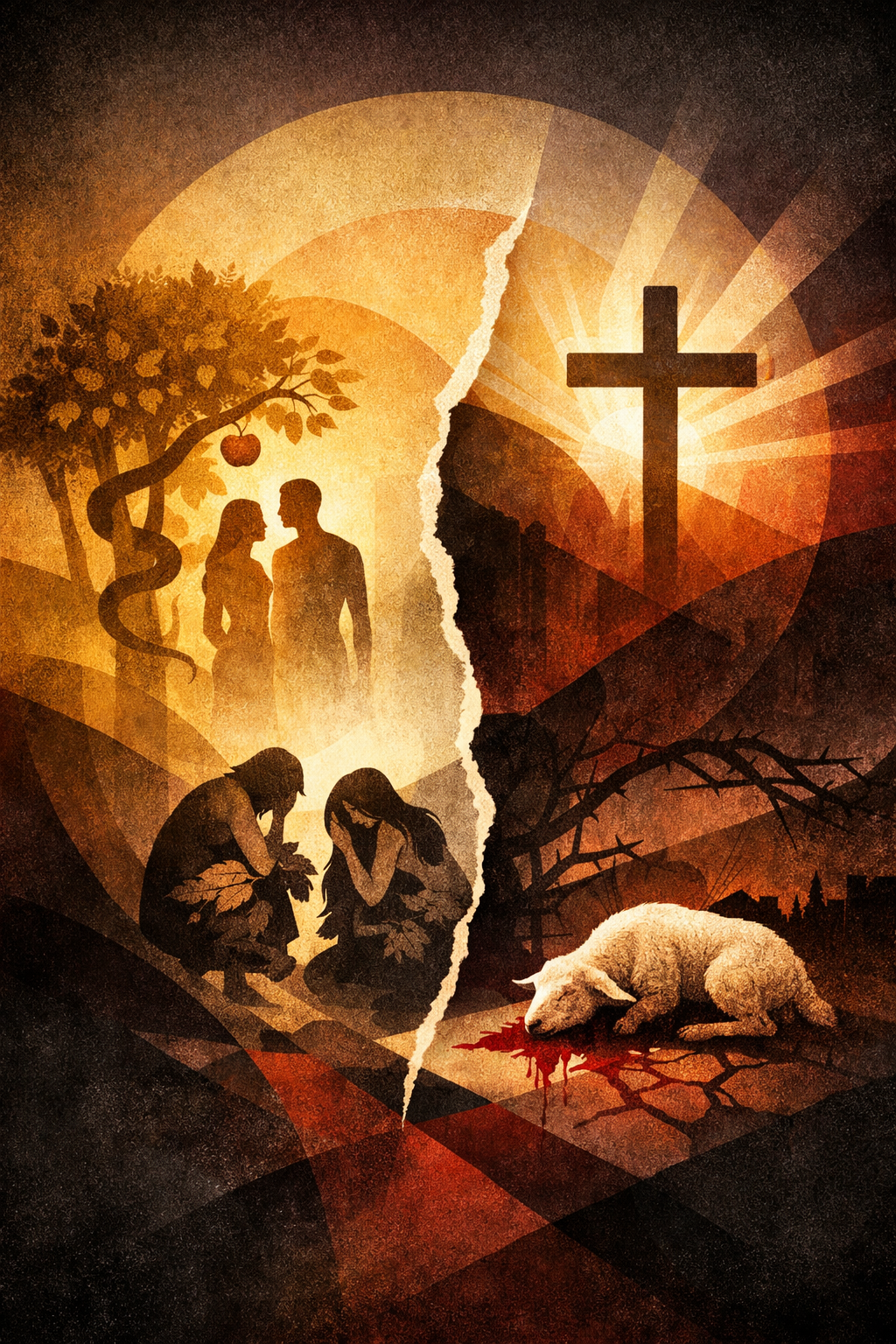
Innocence
Before the awkward silence. Before the mirror became a judge. Before shame estranged us to ourselves. Before being known felt dangerous—there was this: “The man and his wife were both naked and were not ashamed.”
No embarrassment.
No inward cringe.
No calculated self-presentation.
No polished version.
No curated profile.
John Milton called it “simplicity and spotless innocence.” They “thought no ill.” No suspicion in the thoughts. No slander in the voice. No manipulation in the touch. No shame in the glance.
They did not perform for acceptance. They did not fear exposure. They welcomed the presence of God without dread. They lived in the freedom of nothing to hide.
And of course they were. This was their Father’s world.
Exposure
God had forbidden them to eat of the tree of the knowledge of good and evil. To eat was not enlightenment, but death. But in the quiet perfection of Eden, an adversary slipped into paradise.
The temptation was not merely to taste a forbidden fruit. It was to reach for what had been refused, to take what was not given, to eat what God had said would kill. And beneath the offer was the deeper lie: that God was not generous, but restrictive; not good, but withholding.
Then the eyes of both were opened—opened not into wisdom, but into exposure. Opened not into glory, but into shame. Then they knew that they were naked.
Now the heart feels restless.
Now their own skin feels unfamiliar.
Now their own gaze feels cruel.
Now being seen feels dangerous.
Now being known feels unbearable.
No longer fearless before God. No longer safe in their own innocence. No longer satisfied in soul. No longer able to bear the light without wanting the shadows.
Flimsy
Suddenly—the scramble begins. Fear takes over. Shame consumes them. Now their own skin feels like a problem. Now the garden feels too exposed. Now the first instinct is not worship, but hiding.
In shame, poor sinners, blinded and broken, they grasp for a fix. They gather leaves. They stitch fast. They pull on something rough, prickly, scratchy, thin.
Flimsy.
Independent.
Unacceptable.
Insufficient.
In God’s light they behold their darkness. Under his holiness they feel their corruption. And yet still trying to build a hiding place with leaves.
Because there is no hiding place from guilt and shame—no hiding place sinners can stitch for themselves.
Clothed
“And the Lord God made for Adam and for his wife garments of skins and clothed them.”
As the loving Father of his family, he saw them poor and wretched, weak and wounded, bruised and broken by the fall. He saw the miserable mess. The fig leaves. The poor sewing. The helpless sinners trying to cover shame with the work of their own hands.
And he did not leave them there.
Not disapproving from a distance.
Not handing them better leaves.
But moving toward them in love.
He took from the flock an innocent creature. A gentle beast. One life for another. And for the first time, blood touched the ground.
He made a garment for the naked. A covering for the ashamed. Something sufficient for the long road ahead—for bitter toil, for incredible pain, for thorns and sweat, for tears and graves, for life east of Eden.
And yet, this act of grace was provisional. The curses remained. The garden was still lost. Clothed, but still broken.
Unclean
Outside the garden, everything twisted. Two sons—one murdering the other. Meals made with anxious labor. Life warped from the start. Joy mixed with sorrow. Love mixed with pain. Work mixed with thorns.
And shame became an inheritance. Passed down like a family name. Handed from generation to generation. Not left in Eden, but carried into every home, every table, every room, every heart.
Clothed—yes.
But now contaminated.
Image marred.
Relationship lost.
Common now, not holy.
Unclean now, not clean.
So life becomes a cycle: wash, wait, offer, repeat. Cleanse yourself of filth and blood. Bring the sacrifice. Spend the cost. Feel the lesson.
Until at last the soul cries out: Purge me with hyssop, and I shall be clean. Wash me, and I shall be whiter than snow.
Endured
Shame drove them further east, and sorrow followed. We became a people who remember ruin. A people who know affliction. A people who sit in despair and feel the burden of what sin has done.
And that hope has a name. Jesus.
Before he came, death reigned. Man wandered east of Eden through a savage wilderness—poor and wretched, weak and wounded, sick and sore, bruised and broken by the fall.
Then—he came. Not avoiding our misery, but entering it. Not staying far off, but drawing near. The Incarnate God. Full of pity, joined with power.
The Holy One stepping into the dwelling place of the curse.
The Lord of glory born among the shameful.
Walking among the wounded.
Standing with the outcast.
Bearing the sorrow of the world.
Then—with grief and shame weighed down, scornfully surrounded, thorns his only crown—he endured the cross. He bowed his humble head to mortal pain. He became acquainted with grief. A man of sorrows.
And this is the work of God: that you believe in him. That you look to Jesus. That you do not trust your tears, your fitness, your effort, your promises to improve.
If you believe in him—him who endured the cross, despising the shame—then you are no longer named by your uncleanness, your failure, your disgrace. You are given the right to be called a child of God.
Are you tired of trying to outlive your shame? Tired of managing the image? Tired of curating the approved version of yourself?
Lay your shame down. And be clothed by him.
Not once you’ve cleaned yourself up. Not once you’ve figured everything out. Not once you feel more spiritual, more stable, more worthy.
Come now—poor and wretched, weak and wounded, bruised and broken by the fall. Bring the shame. Bring the regret. Bring the weariness. Bring the mess you have been trying to hide.
To the Cross. To Jesus. Come to Jesus Christ and rest.
Crowned
“I will greatly rejoice in the Lord; my soul shall exult in my God, for he has clothed me with the garments of salvation; he has covered me with the robe of righteousness...”
The robe of righteousness for your shame can only be found in Christ Jesus.
There is no other covering that can cleanse the conscience, silence accusation, and make sinners fit for the presence of a holy God.
Jesus says, “Whoever feeds on my flesh and drinks my blood has eternal life, and I will raise him up on the last day.”
On this dark Friday, we are confronted with what sin has done to us.
Our shame is not shallow.
Our need is not small.
Left to ourselves, no hope for the pretending heart, no salvation for the polished image, no cleansing for the one content to hide.
And as you prepare your heart to respond to the death of Christ, ask yourself:
Have I come to terms with the shame sin has stamped upon me?
Have I come to terms with the fact that I cannot heal myself, cleanse myself, or clothe myself?
Have I stopped trusting in religion, appearances, effort, or morality to do what only Christ can do?
The only hope of restoration is found in trusting the Faithful One—the One who endured shame, suffered in your place, shed his blood for your cleansing, and now offers you the garments of salvation and the robe of righteousness.
There are not many moments in our days when we stop long enough to sit quietly before God, our Creator. Let this be one of them.
And if, as these truths have unfolded, you have come to see that you are not truly a Christian—though your parents may assume you are, though your friends may think you are, though you have sat in church for years as one more quiet face in the room, watching but not worshiping, present but not surrendered—then do not stay where you are.
Come and pray before the cross.
Cry out to God.
Do not leave with your shame concealed when Christ is ready to cover you with grace.
Do not remain distant when Jesus receives sinners.
Come. Come honestly. Come helplessly. Come now.
You will find that the Christ who was stripped in shame is able to robe ashamed sinners in righteousness.
You will find that the Savior who endured the cross is ready to embrace all who come to him in faith.