Faithfulness Under Fire: Wang Ming-Dao and the Church in China
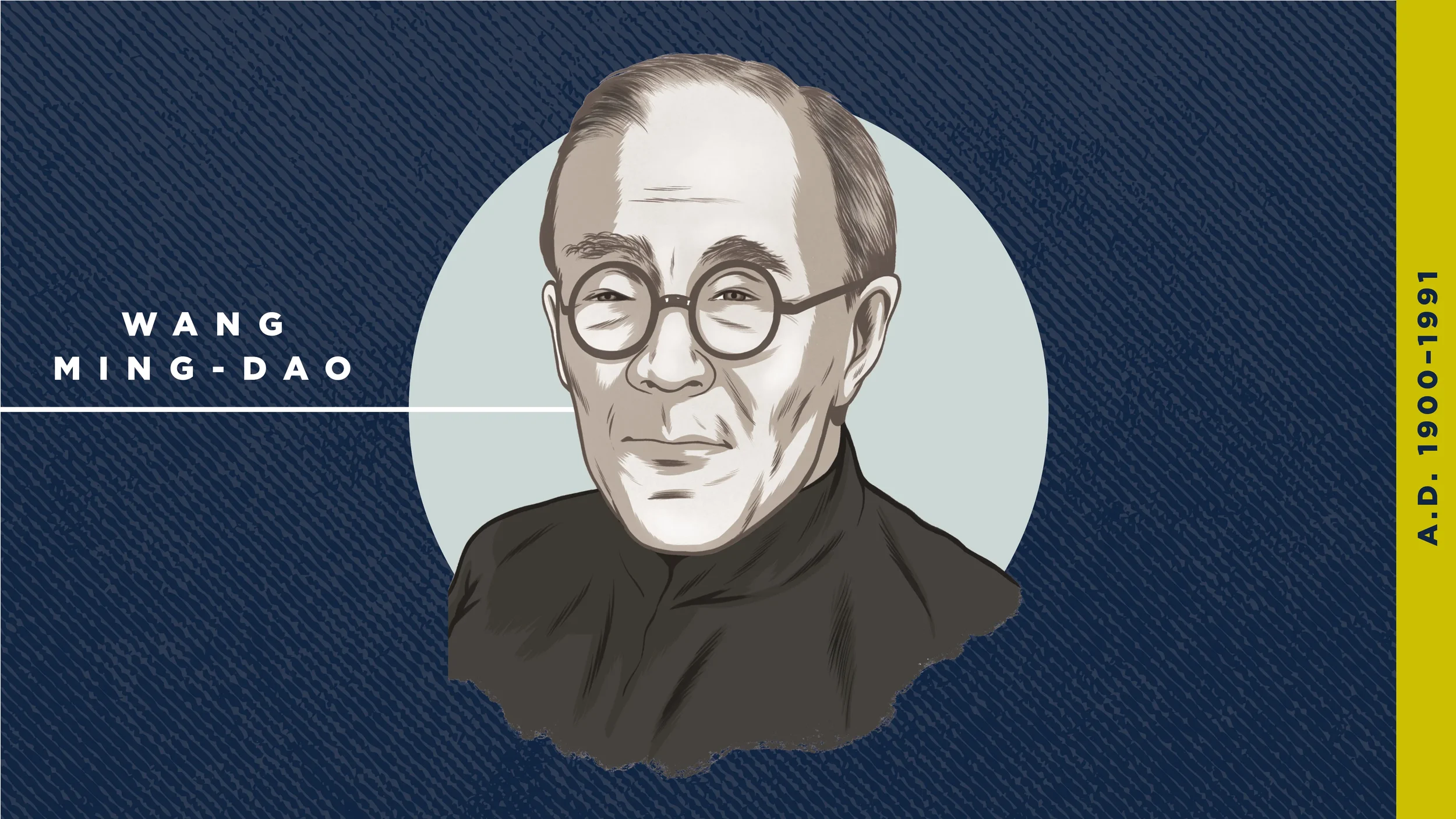
Wang Ming-Dao, 1900-1991
When we consider the growth of Christianity in China, we are quickly reminded of the ongoing persecution of Christians by the Chinese government. A recent report by ChinaAid documented widespread repression of believers across the country. ChinaAid president and founder Bob Fu expressed grave concern over how both house churches and state-sanctioned churches are being treated. According to the watchdog organization Open Doors, China has approximately 96.7 million Christians, many of whom face increasing restrictions.
Fu noted that new regulations on religious content online have severely limited Christian activity and visibility. Authorities have cracked down on Christian websites and apps in an effort to, as ChinaAid describes it, “remove Christianity from cyberspace.”
The Chinese Communist Party (CCP) views Christianity as a threat to its vision of a unified socialist society under the absolute authority of the state. In one sense, their suspicion is understandable. Christians confess Jesus Christ as Lord, not Xi Jinping or the CCP. In this respect, the situation of believers in China resembles the circumstances described in the book of Daniel, where Daniel and his friends remained loyal to the God of Israel despite the demands of rulers such as Nebuchadnezzar and Darius.
Among the many faithful believers who have endured persecution in China, Wang Ming-Dao stands out as a remarkable example. Often called the “Dean of the House Churches,” Wang remains a powerful model of fidelity to Christ amid immense pressure.
Wang was born during the Boxer Rebellion, a violent uprising fueled by anti-foreign and anti-Christian sentiment. He attended a school operated by the London Missionary Society and came to faith in Christ in 1914. Early in his ministry he demonstrated strong theological convictions. His insistence on believer’s baptism cost him his position with the Presbyterian Church. Yet God soon opened other doors. By 1923 he was preaching widely at conventions and evangelistic meetings.
Not long afterward, Wang began a Bible study in his home that eventually developed into a thriving house church. He once summarized his ministry with simple clarity:
“On the one hand I emphasize beliefs; on the other hand I emphasize the Christian’s manner of life.”
Wang was known for his strict commitment to sound doctrine and holy living. Yet he did not merely preach these principles—he embodied them.
Throughout his ministry he prepared believers to endure suffering for Christ. In one sermon he addressed the experience of hardship:
“You feel downcast and even broken-hearted… You feel that the Lord has deliberately made you bear the one thing most difficult to bear… You ask in your heart, ‘What is the meaning of this?’… Your heart is filled with darkness and affliction.”
Yet Wang urged believers to trust in the goodness of God—a goodness most clearly revealed in the redeeming work of Christ.
During the Japanese occupation of China during World War II, the occupying forces required all publications to print propaganda slogans supporting their rule. Wang edited a journal called The Spiritual Food Quarterly, yet he refused to submit to these demands. He believed that compromising truth would ultimately destroy the church. Despite the pressures of occupation, he continued to lead faithfully, and the church remained active.
After the war, however, a new challenge emerged. With the establishment of the People’s Republic of China, the Communist government sought to reshape Christianity into a patriotic institution aligned with socialist ideology. In 1954 the government promoted a seven-point proposal designed to integrate churches into the state’s political program.
The proposal urged Christians to support the communist constitution, resist “imperialism,” and participate in patriotic education designed to eliminate Western influence. The movement eventually developed into what became known as the Three-Self Patriotic Movement.
Communist publications openly declared their suspicion of Christianity, portraying missionaries and church leaders as agents of Western imperialism. One statement insisted that churches should hold “accusation meetings” against those supposedly serving foreign interests.
Wang, however, recognized the greater danger. Although he had minimal ties to Western institutions, he believed the movement threatened the integrity of the gospel itself. His objection was fundamentally doctrinal.
He wrote:
“These people say they are Christians, but they do not believe the truth in the Bible that must be accepted by faith. They do not believe that man was directly created by God, that Jesus was born of the virgin, that Jesus died on the cross for our sins, that His body was resurrected, or that He will come again.”
Wang warned that the movement represented a wolf in sheep’s clothing. In his words:
“The Three-Self Church is the most effective method used by those outside the Church to destroy the Church from the inside out. Throughout history, no one had thought of such a clever way to destroy the Church, but today it has been discovered.”
Because he refused to cooperate, government pressure quickly escalated.
In 1955, authorities arrested Wang, his wife, and several church leaders on charges of counterrevolutionary activity. A year later, he signed a confession to crimes he had not committed, hoping to secure the safety of his wife. He publicly read the confession and was briefly released.
But Wang soon regretted his compromise. After his release, he refused to merge his church with the government-controlled movement. Authorities promptly rearrested him and his wife. They spent six years in detention before Wang received a life sentence, while his wife was sentenced to fifteen years.
Separated from his wife, Wang endured long years in labor camps. Yet even in prison, his faith deepened. Like Paul and Silas in the Philippian jail, he openly sang praises to God in his cell.
In 1979, after more than two decades of imprisonment, Wang was finally released and reunited with his wife in Shanghai. In later years he spoke honestly about his earlier compromise in 1956. Yet he also testified to the restoring grace of God.
Reflecting on the Lord’s mercy, Wang wrote that God had “lifted him up again and enabled him to stand,” filling him with the same joy he had known when he first believed.
Wang Ming-Dao’s life reminds us that our hope ultimately rests not in our own strength, but in the grace of Christ. Even when believers stumble, the cross remains sufficient to forgive, cleanse, and restore.
For this reason, Christians need not cower in the face of hardship. God does not abandon His people. He holds them fast.
The hymn writer Ada R. Habershon captured this truth beautifully in He Will Hold Me Fast:
When I fear my faith will fail
Christ will hold me fast
When the tempter would prevail
He will hold me fast
I could never keep my hold
Through life's fearful path
For my love is often cold
He must hold me fast
God must hold me fast when I am tempted to compromise, when I fear my faith is slipping, and when I am walking through life's fearful path. He must, and He promises that he will. If I happen to stumble, his grace is sufficient for me to cleanse me and restore me.