The Myth of Left and Right: A Christian Response to Political Labels
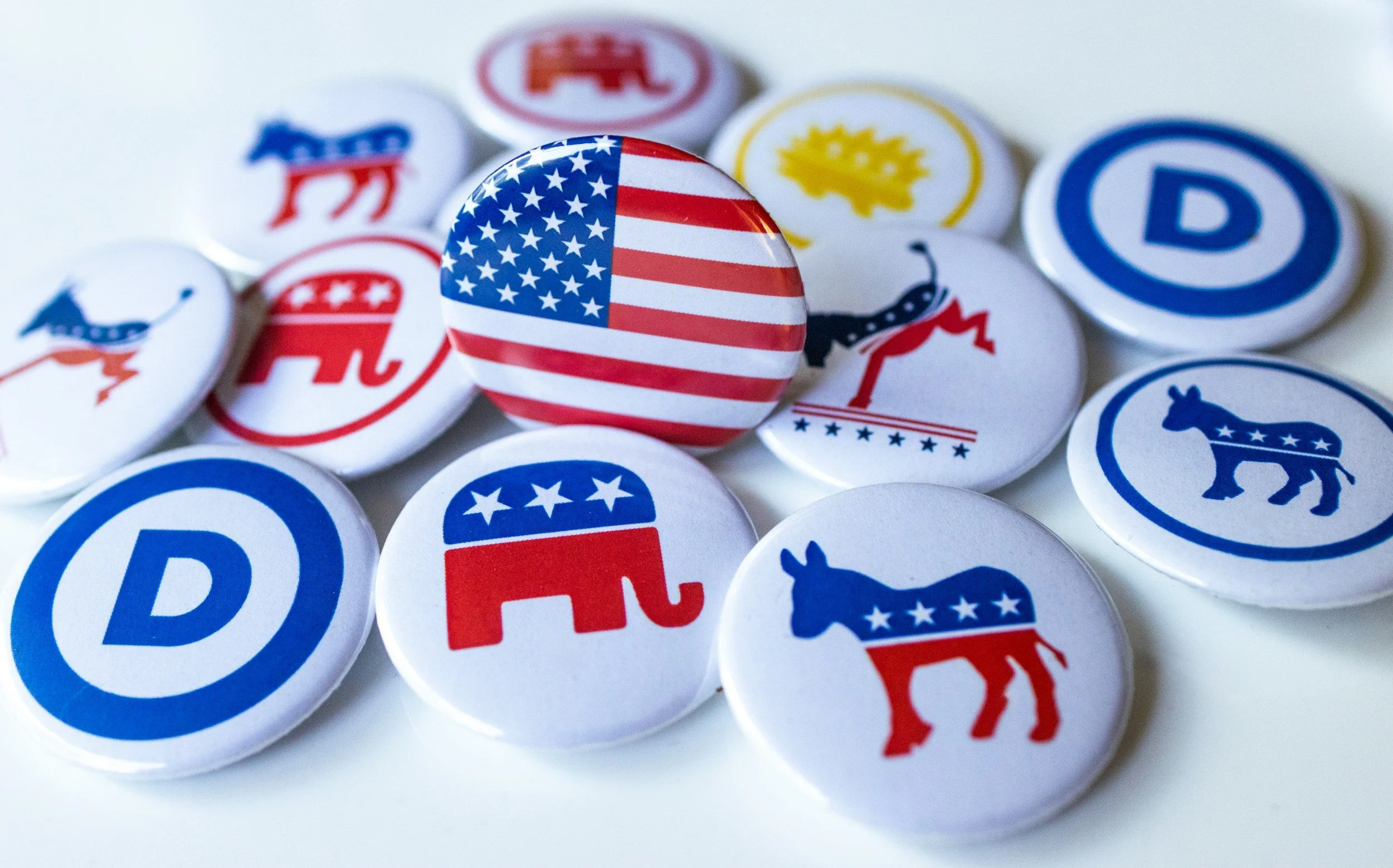
Christians today live in a deeply political age. News cycles, social media, and public discourse constantly frame our world through political categories—liberal and conservative, Democrat and Republican, left and right. These labels are used as if they represent fixed ideological systems. Yet in reality, they are far more fluid than most people realize.
An article in The Wall Street Journal titled “The Myth of Ideological Polarization” argues that the terms left and right are not stable philosophical traditions. Instead, they function more like shifting social tribes whose ideas and priorities constantly change. What counts as “left” today may not have been considered left twenty years ago. Likewise, what qualifies as “conservative” today may not resemble conservatism from previous generations.
This dynamic helps explain a phenomenon we see frequently in modern politics. People who have not changed their views can suddenly find themselves labeled differently simply because the ideological landscape around them has shifted.
Elon Musk illustrated this point when he noted that although his political views have remained largely the same since 2008, he is now commonly described as center-right rather than center-left. The shift did not occur because Musk moved politically. Rather, the political categories themselves moved.
Political identities are therefore less stable than many people assume. Social conformity, rather than philosophical consistency, often determines who belongs to a particular political tribe. Those who refuse to adopt the newest positions within their group may appear to have “switched sides,” even though their convictions remain unchanged.
This pattern has occurred across the political spectrum. On the right, some conservatives who resisted the populist or nationalist direction of recent years were labeled moderates or liberals. On the left, shifting expectations about cultural and social issues have redefined who counts as progressive. In both cases, ideological boundaries change, and those who do not conform risk being pushed out of the tribe.
The result is increasing hostility between political groups. Political scientists often describe this phenomenon as polarization, suggesting that parties are moving toward opposite ideological poles. But this explanation may actually obscure the deeper problem.
What we often see is not ideological clarity but tribal loyalty. The boundaries of political tribes change constantly, and those who do not fully adopt the newest positions are treated as outsiders.
In this environment, political labels become weapons. Words like liberal, conservative, progressive, and far-right are often used less as meaningful descriptions and more as ways of dismissing or attacking others. If someone disagrees with us on a particular issue, we quickly assign them to the opposing tribe. While this dynamic is troubling in society, it becomes especially concerning when it appears within the church.
Political Tribalism in the Church
Christians are not immune to the tribal instincts of the broader culture. In fact, political identity can sometimes become a source of division among believers.
Within the church, brothers and sisters in Christ are often labeled according to political categories—left, right, liberal, conservative—as if these labels define a person’s identity. Yet these categories are unstable and constantly shifting. What they mean today may not be what they meant even a few years ago.
Why, then, do we use them so confidently to divide one another? Too often Christians appear more secure in their political tribe than in the gospel itself. If we know that someone professes faith in Christ, why do we sometimes feel more threatened by their political opinions than encouraged by their shared salvation?
The New Testament repeatedly calls believers to unity in Christ. Yet political disagreements frequently fracture relationships within the church. This raises an uncomfortable question: Why do some Christians seem more confident defending their political ideology than proclaiming the gospel?
Political movements offer clear narratives about who is right and who is wrong. They provide a sense of belonging and identity. But when political allegiance becomes central to our identity, it can easily become a form of idolatry. Scripture repeatedly warns us against placing ultimate trust in anything other than God.
The Danger of Political Idolatry
The story of the golden calf in Exodus provides a powerful illustration of this danger. After God rescued Israel from slavery in Egypt and gave them His law, the people quickly turned to idolatry. While Moses was on Mount Sinai, the Israelites fashioned a golden calf and declared:
“These are your gods, O Israel, who brought you up out of the land of Egypt.”
In doing so, they transferred their trust from the living God to a man-made object.
The temptation for modern Christians rarely involves a literal idol of gold. Instead, our idols often take more subtle forms—ideologies, political parties, or national movements. When we begin to believe that a political tribe will ultimately save the nation or secure our future, we have misplaced our trust.
Political engagement itself is not wrong. Christians should care deeply about justice, governance, and the well-being of society. Yet political solutions can never serve as our ultimate hope. As Eugene Park observes, Christians must approach politics with radical humility, guarding against the kind of certainty that leads to idolatry.
A Christian Posture Toward Politics
The New Testament calls believers to a radically different posture toward one another. In Ephesians 4:1–3, the apostle Paul writes:
“Walk in a manner worthy of the calling to which you have been called, with all humility and gentleness, with patience, bearing with one another in love, eager to maintain the unity of the Spirit in the bond of peace.”
This instruction challenges the tribal instincts of political culture. Instead of hostility and suspicion, Christians are called to humility, patience, and love.
Jesus similarly warned against self-righteous judgment. In Matthew 7, He instructs His followers to examine the log in their own eye before attempting to remove the speck from another’s.
Christians are people of repentance. We confess our sins, acknowledge our blind spots, and seek God’s grace daily. Because we are saved by grace, we should approach disagreements with humility rather than arrogance.
Political conversations within the church should therefore be marked by patience and charity. Our brothers and sisters may have perspectives or experiences that we need to hear.
As Jonathan Leeman has written, Christians should be the first to stop self-justifying and the first to examine themselves when necessary. Our unity in Christ is far more fundamental than our political opinions.
Where Our Hope Truly Lies
Ultimately, the Christian’s confidence does not rest in political movements or leaders. Governments rise and fall. Parties redefine themselves. Ideologies shift with time. But the gospel does not change.
Salvation has always been—and will always be—by grace alone through faith alone in Christ alone. The message that saved believers in the first century is the same message that saves today.
Our political judgments will never be perfect. Our motives will sometimes be mixed. Our decisions will be flawed. Even our best intentions are affected by sin.
Yet our salvation does not depend on our political accuracy or ideological precision. It rests entirely on the perfect righteousness of Jesus Christ.
Christ lived the life we could not live and died the death we deserved. His righteousness is credited to all who trust in Him. That is the foundation of our hope.
One day, Christ will return and establish His kingdom fully. In that kingdom, there will be no competing political tribes, no ideological conflicts, and no rival claims to authority. There will be only one King.
Until that day, Christians should resist the temptation to place ultimate confidence in politics. Instead, we must live with humility, remembering that our deepest identity is not found in a political tribe but in Christ.
And as we engage the world around us—reading the news, discussing public issues, and participating in civic life—we should do so with humility, charity, and confidence in the unchanging gospel. Because while political definitions may change every few years, the good news of Jesus Christ never will.