

Faithfulness Under Fire: Wang Ming-Dao and the Church in China
When we consider the growth of Christianity in China, we are quickly reminded of the ongoing persecution of Christians by the Chinese government. A recent report by ChinaAid documented widespread repression of believers across the country. ChinaAid president and founder Bob Fu expressed grave concern over how both house churches and state-sanctioned churches are being treated. According to the watchdog organization Open Doors, China has approximately 96.7 million Christians, many of whom face increasing restrictions.

Access Granted: Jesus’ Death Opens the Way to Wisdom and Joy.
Some rooms don’t let you in unless your name is on the list. That’s how exclusive events work. The Met Gala, arguably the most famous invitation-only event in the world, runs on approval, connections, and gatekeepers. If the right person doesn’t approve of you, you don’t get in. The velvet rope doesn’t care how sincere you are, how badly you want it, or how confident you sound at the door.

Why Am I So Tired in My Faith?
Why do many Christians today feel exhausted from trying to be good enough?
It is true that our American culture is obsessed with performance, production, and perceived value but how does this translate to church culture? Why do we find ourselves working so hard for intimacy with God only to end up feeling like He is even further away? What would happen if we could truly do as the Bible commands us in Psalm 46:10 and “cease striving and know that I am God?”
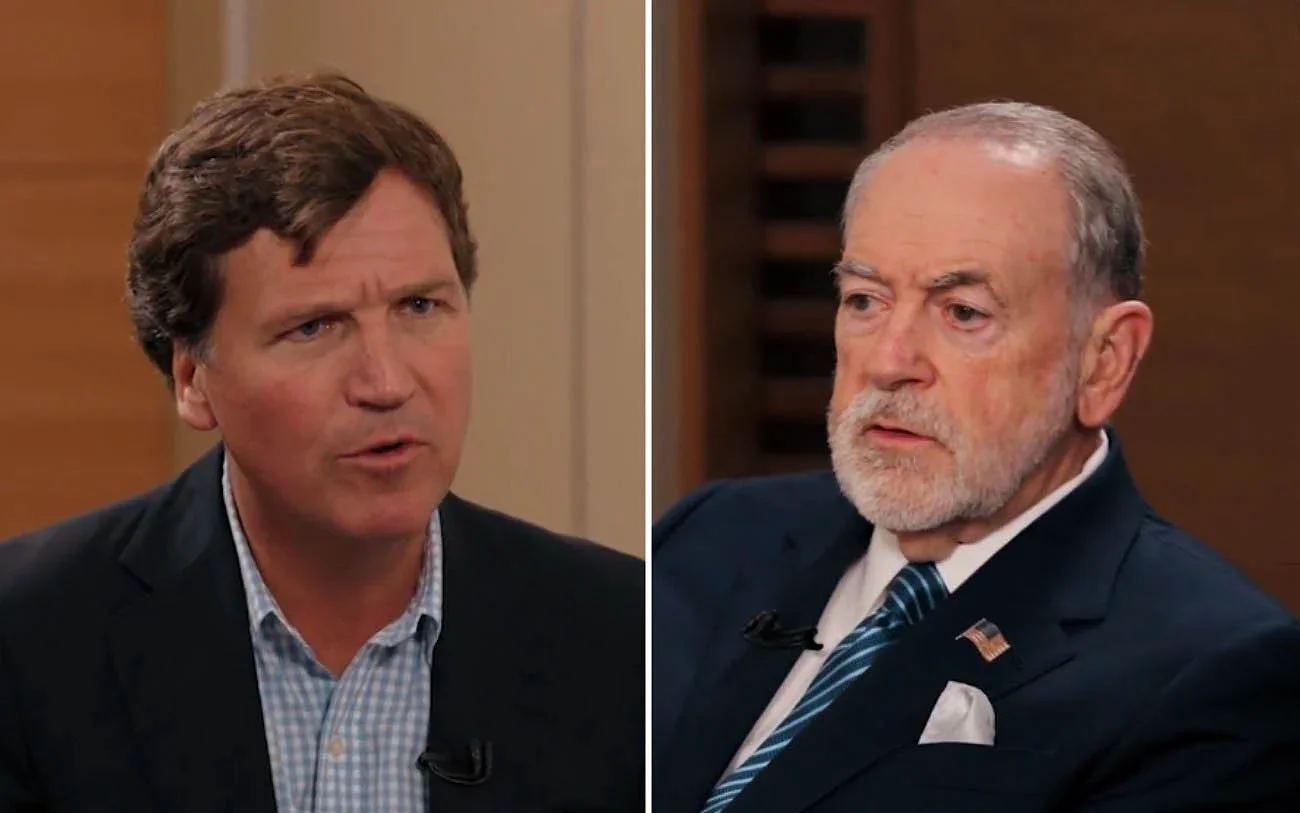
A Christian Zionist on the Hot Seat: Huckabee vs Tucker
I just watched the 2½-hour interview Tucker Carlson did with Mike Huckabee a few days ago, and I’d encourage you to watch it too. I found it genuinely thought-provoking—partly because I haven’t spent much time studying either man. Huckabee is a former governor of Arkansas, a Baptist pastor, and he now serves as the U.S. ambassador to Israel. Tucker Carlson is a famously provocative media personality who also identifies as a Christian. The interview was recorded in Israel, and Tucker pressed Huckabee with difficult questions about the legitimacy of Israel as a secular nation-state—and about who, exactly, deserves citizenship there.
From Cross to Crown: Christian Nationalism and a Theology of Glory
Many Christians today feel disenfranchised as they look at the world around them, noting the accelerating dissolution of the basic institutions and public moral grammar they took for granted even a few decades ago. In response, some have looked back to “Christendom,” the long era from Constantine to the Peace of Westphalia when the Western world was marked by the magisterial establishment of Christianity. That experiment, which was an intentional entwining of church and state, furnished Europe and its colonial descendants with a shared religious and cultural heritage that now seems all but lost. Against this backdrop, Stephen Wolfe’s The Case for Christian Nationalism stands out as a sophisticated defense of retrieving something like Christendom.
Heaven’s Hall of Fame
In a conversation with a friend, we discussed the thought: there’s a Hall of Fame for everything—tow trucks, insurance, even cockroaches. But the real question is sharper:
If there were a Christian Hall of Fame, who would be in it—and by what standard?

Friends in a Strange World
I recently finished the final season of Stranger Things. The season had its uneven moments, but I was genuinely satisfied with how the story ended. I also laughed at how often the writers staged deep, emotionally honest conversations while the world was literally collapsing around the characters. Still, after five seasons of battles with the Mind Flayer and Vecna—after the Upside Down, the abyss, and everything in between—the series closes where it began: in a basement, among friends.
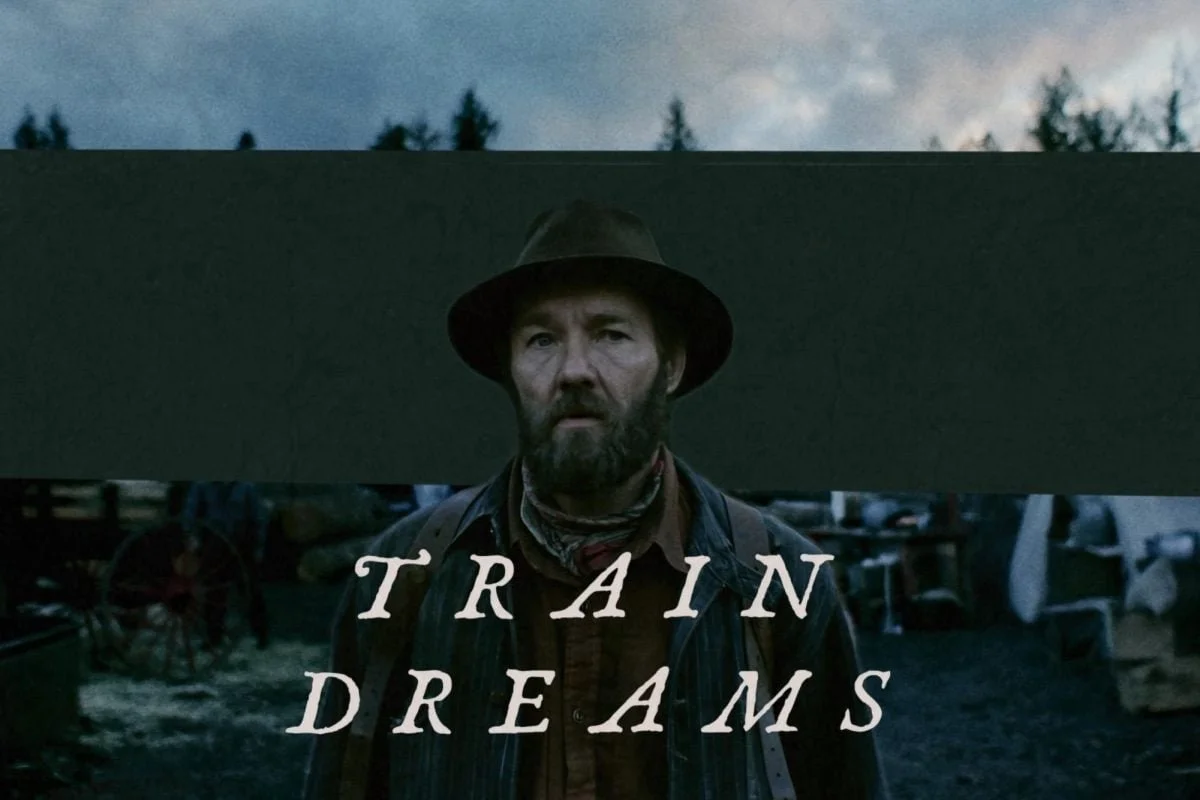
Work, Loss, and the Search for Purpose: A Christian Perspective on Netflix Hit, Train Dreams
Denis Johnson tells the story of Robert Grainier, a man shaped by loneliness, labor, and loss in the American West near the turn of the twentieth century. Without spoiling the plot, Robert’s life is marked by repeated catastrophe, interrupted by only brief pockets of ordinary joy. He is resilient—stalwart, loyal, and hardy—and yet the tone of the story is unmistakably melancholic: a man doing his best to live well while the world moves on without noticing.

Sermons Aren’t Enough: Reading As A Means of Grace
I believe in preaching. But a 45-minute monologue once a week—delivered by one person—cannot, by itself, meet the discipleship needs of an entire congregation. Weekly Bible studies provide another layer, but many believers can’t attend consistently because of work and family constraints. So we’re left with a practical question: how do we provide consistent, effective discipleship to most Christians?
My answer is simple: people must read more.
Dictators Aren’t Leaders
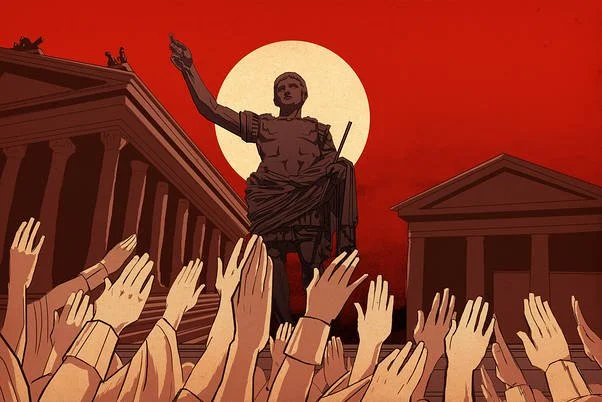
We live in an era where leadership training is everywhere. Books, podcasts, and conferences promise the latest framework, the newest method, the secret that will finally “move the needle.” Pastors and church leaders, in particular, are routinely targeted as prime consumers of leadership content.
And yet leadership remains in crisis.

What You Love Will Hold You
Many people had already “followed” Jesus—right up until his words offended them or his mission threatened their dreams. In John 6, after Jesus refused to be used as a political deliverer or a bread machine, the crowd thinned fast:
“After this many of his disciples turned back and no longer walked with him.” (John 6:66)
That’s the danger Jesus is addressing in John 16. Not merely external persecution, but internal collapse—when the thing you really love gets threatened, and Jesus no longer seems worth it. So the question beneath the passage is not, “Will you face pressure?” You will. The question is: “What will hold you when you do?” Because what you love will hold you.

The Theology of Interstellar
Everyone possesses a theology, whether they admit it or not. If you have not reflected on the source of your worldview, it is guaranteed that your theology has been shaped by the influences surrounding you. For example, children raised exclusively in Muslim communities often grow into adults with a fatalistic mindset, as that culture is grounded in determinism. During the year I lived in Bahrain, I heard the Arabic phrase “Inshalla,” meaning “If God wills it,” probably ten times a day. Conversely, a child raised in secular America often has a markedly different outlook, believing that they are the masters of their own destinies. America is obsessed with liberty and freedom, which may partly explain why many Westerners cringe at the mention of Calvinism, as it suggests that we may not be as in control of our outcomes as we wish to believe. That said, the great director Mr. Nolan undoubtedly has his own theology, and my purpose today is to explore some aspects of that worldview as reflected in the plot of Interstellar.

A Tribute To Carlene and the Crosswalk
When I worked at Central Church in Collierville, Tennessee, I had a daily routine I came to love. After parking by the Worship Center, I’d walk straight into Central’s coffee shop and bookstore—the Crosswalk—managed by Carlene Boldizar. Without fail, she’d hand me the best cup of coffee in town: beans roasted by her husband, George, and brewed to perfection by Carlene herself.

The Year I Fought a Parking Sign: Gameday Year Two
About an hour before the event, I spotted a beat-up car slowly wandering through the parking lot near the classic show vehicles. My heart rate skyrocketed. Certain this lone assassin was seconds away from totaling someone’s prized ’68 Camaro, I locked eyes on the threat and marched heroically toward the scene—only to walk directly into a metal No Parking sign.

Friday Night Lights at Central: Year One
With only two months to breathe life into a brand-new concept—and as the only person on the planning team actually employed by Central Church—I rushed straight to work. We decided early on that football would anchor our first Gameday event, since the season launches in August and resonates deeply with our community. But the goal was never just an evening of free food, bounce houses, and football décor. Our vision was to introduce Central Church, and the warmth of her people, to the community through a shared cultural love. Grilled hot dogs and games alone wouldn’t accomplish that.

The Liturgies of Sports Fandom
Through my research, I found that men addicted to sports often become strangers in their own homes. This essay will explore where sports obsession began historically, how modern culture intensifies it, why men are ensnared by it, what consequences follow, and finally how Scripture speaks to the problem.

Faith After 2004: The Gap That Shrunk
In the aftermath of the 2004 presidential election, scholars renewed their attention to the role of religion in American electoral politics. George W. Bush mobilized a sizable religious bloc in his reelection campaign against Senator John Kerry, strengthening the perception that highly religious voters tend to vote Republican while less religious voters tend to vote Democratic. This pattern became widely known as the “God Gap.” The implication was clear: if Democrats hoped to win back the White House, they would need to compete more effectively for religious voters. In 2008, Barack Obama made narrowing the “God Gap” a visible priority of his campaign.
In The Disappearing God Gap, six contributing authors analyze how religion functioned in Obama’s historic victory. The book argues that religion played a meaningful role throughout the campaign process—from both parties’ primaries through Election Day. While American public policy maintains a formal separation of church and state, the book insists that this does not mean religion and politics are separated in practice.

Knights, Masks, and the Absurd
One of Nolan’s most compelling features, however, is easy to miss beneath the weight of plot twists, villains, and thrills: the relationship between Bruce Wayne/Batman and his butler, Alfred Pennyworth. This relationship becomes philosophically illuminating when read alongside Søren Kierkegaard’s Fear and Trembling, written in Berlin and published in 1843 under the pseudonym Johannes de Silentio (“John the Silent”). The title, drawn from Paul’s letter to the Philippians—“continue to work out your salvation with fear and trembling” (Phil. 2:12)—signals Kierkegaard’s concern with the seriousness of faith. In a Kierkegaardian analysis of Nolan’s narrative, Bruce Wayne embodies the ethical individual who devotes himself to the universal common good, while Alfred—guardian, watchman, and provider—resembles the knight of faith, the religious individual.

When Ministry Meets Sports: The Story Behind Central Gameday
When I began my role at Central Church in early 2022, I was stepping into a world that felt entirely new. I had never worked in a large evangelical church with a full team of support staff and an army of dedicated volunteers. As a part-time college pastor and cash-strapped church planter in previous seasons, “thinking big” was usually synonymous with “thinking cheaply.” Even so, I always loved dreaming up creative ways to do outreach.
The Gospel, Not the Brand, Is What Makes a Church Last
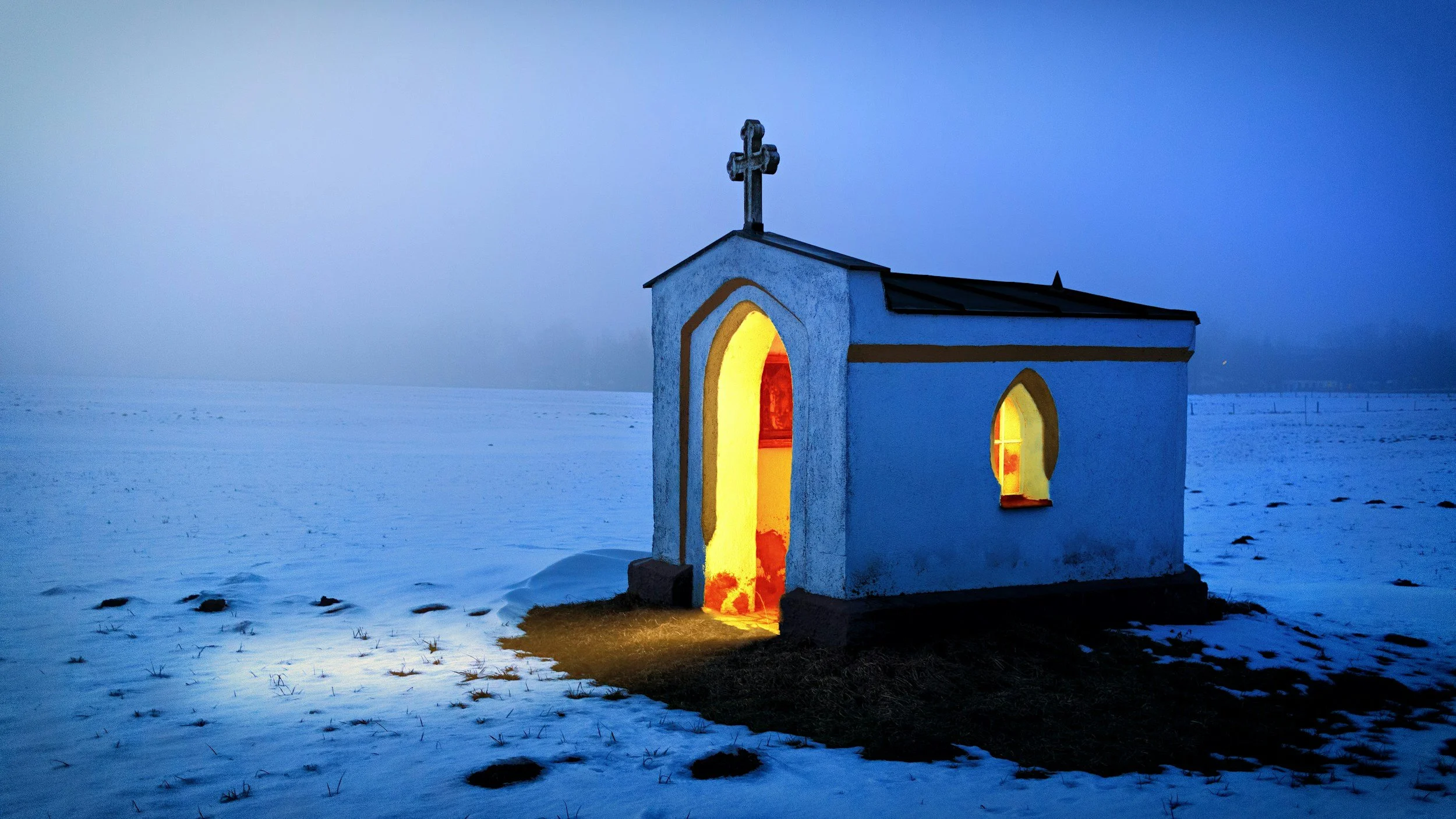
A church’s success is rarely measured the way Christ measures it. In our culture, we love what is large, impressive, and successful. We celebrate churches with swelling attendance, polished branding, and seemingly endless resources. But Revelation 3 reminds us that Christ evaluates His church by a completely different standard. He is not impressed by what dazzles the world. He is moved by what is faithful to Him.